
We discourage chasing points and overfocusing on competitive performance. “META” (Most Effective Tactics Available) narrows the arsenal and limits the target zones.
Key principles of scoring
Three common scoring frameworks in fencing are:
Points are awarded based on the potential damage of the hit (target zones), with specific provisions for double hits and afterblows. We may award up to 10 points for each successful attack or start each fencer with 10 “Health Points” and deduct points for every “wound.”
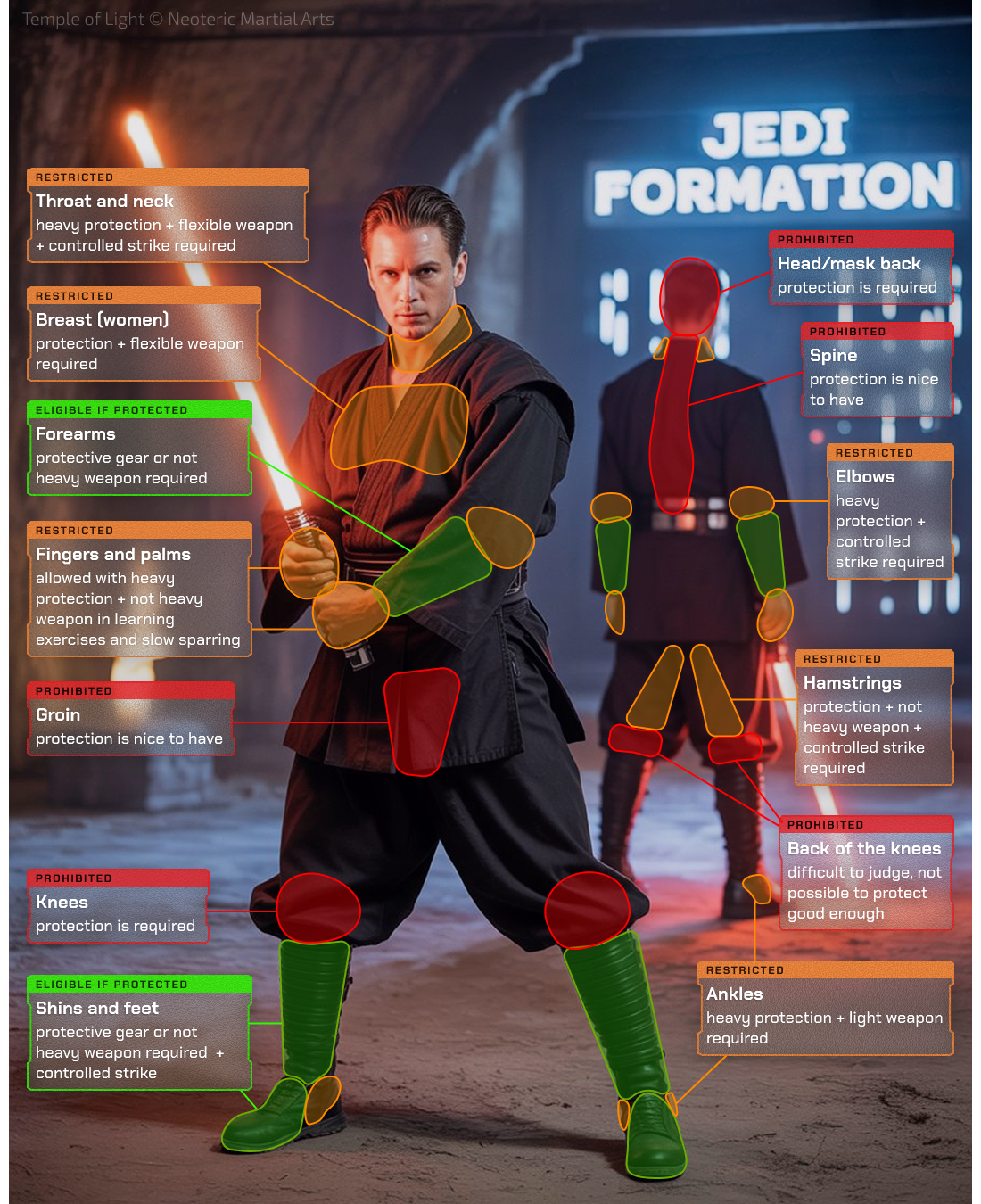
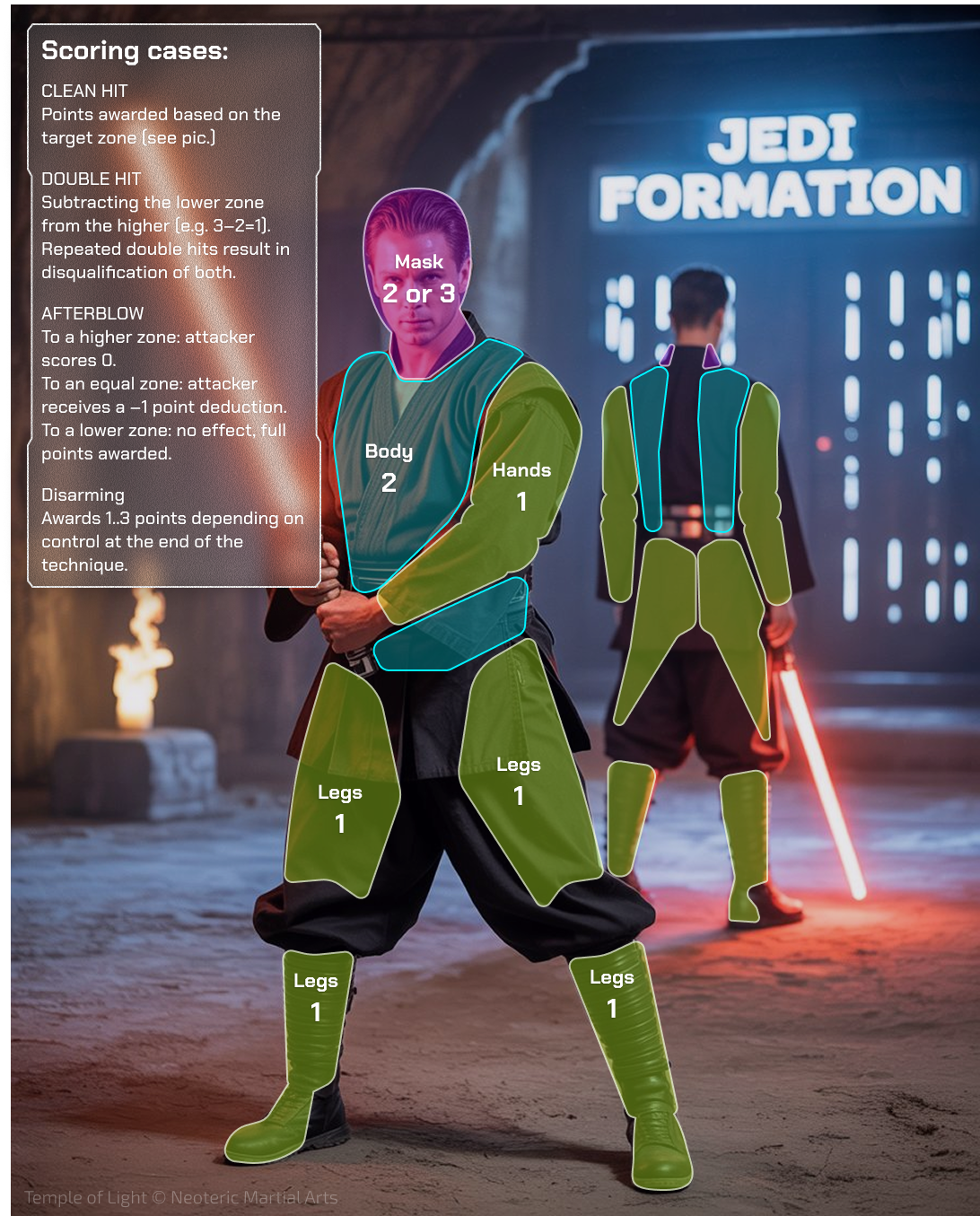
Simultaneous strikes are actively discouraged, even when one fencer gains a scoring advantage. Defense comes first: in real combat, the priority is staying alive.
A hit must qualify
A hit must qualify — it must demonstrate a small but distinct amount of force representing realistic combat potential. It is not a game of tag. As a general rule, a cut requires at least 45° of blade travel. For a thrust, at least 10 cm of forward travel beyond initial contact must be demonstrated by either the bend of a flexible blade or clear control showing that a rigid blade could travel 10 cm deeper.
Strikes with the flat of the blade are considered valid only with a lightsaber, and only when the general qualification criteria are met.
Additional techniques
The full spectrum also includes hand-to-hand combat elements, such as blade deflections with the hand (not applicable with a lightsaber), grips, grappling, and controlled punches or pommel strikes.
A disarm awards 1–3 points depending on control at the end of the technique:
Throw awards 1–3 points as well:
No additional points are awarded for “style” — technical execution is either clean, effective, and beautiful or it is not.