
Sparring is a controlled simulation of a real fight. Rules and scoring allow us to determine an outcome without causing serious harm. They should remain a living framework, evolving with equipment and training methodology while preserving the qualities of combat they are intended to model.
Sparring is not a means of self-assertion or an outlet for compensating for low self-esteem or other psychological issues.
We focus on practical combat skills rather than optimizing solely for competition. Our aim is to explore a broad range of Martial Arts techniques, expand our technical arsenal, and give our partners the same opportunity.
We maintain a high standard of mutual respect in accordance with our etiquette rules, rituals, and training protocols.
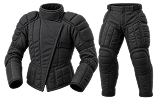
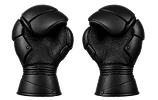
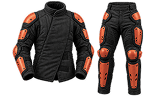
Protective gear requirements
We prioritize protective equipment over making training weapons light and soft, which compromises the richness and depth of techniques.
- Training profile
- Flexible, lightweight
- Specification
- Length: ~117 cm, blade wall: 3 mm
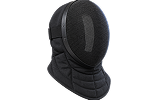
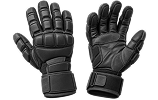
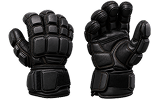
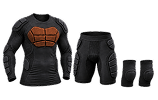
- Training profile
- Flexible, medium
- Specification
- Kendo standard size N38
- Training profile
- Medium or heavy
- Specification
- Standard for kenjutsu
- Training profile
- Heavy
- Specification
- Flexible blade, blunt edges
We practice the full spectrum of attacks using enhanced lightsabers or other types of weapons. Thrusts are often underutilized because of modern LED saber design. However, thrusts may only be used with a flexible blade weapon, protective equipment and in a controlled manner.
Types of sparring and weapons allowed
- Format
- Slow, light contact, controlled
- Learning focus
- Precision, mutual learning
The goal is not to "win" by landing more hits, but to explore as wide as possible variety of attacks, perfecting them, refine execution, and give your partner the same opportunity to develop defensive skills. Attacks should be controlled and have reasonable speed.
- Format
- Rounds with breaks
- Scoring
- Most hits at the end wins
The fight is paused by the referee or a participant after every successful hit or afterblow to record points. Stepping outside the designated fight area pauses the fight; pushing an opponent out is not allowed.
- Format
- Non-scoring, pressure
- Control
- Instructor's supervision is mandatory
Domination till give up. No timeouts, no breaks. No rules except safety rules. Break after a successful series, a defined exchange or a submission, knockdown, or voluntary give up. No boundaries of the fight area; use of terrain and environment is allowed. Best practices, control and fighter's etiquette remain mandatory, so the fight does not become a mess.
We discourage the use of excessive force (more than necessary to perform the technique). There are restricted and prohibited zones even when using protective equipment.